
Wednesday, January 13, 2010

Tuesday, January 12, 2010
U.S. Army Public Affairs Handbook
U.S. Army Public Affairs Handbook: "
 Army Public Affairs Center
- ST 45-07-01
- 244 pages
- Army Public Affairs Center 6th ACR Rd, Fort Meade, Maryland 20755-5650
- For Official Use Only
- April 5, 2007

"Who is your audience?
When you talk to reporters, you are actually talking through the reporters to:
o Family and friends
o Other Soldiers & potential recruits
o Audiences throughout the world
o Political members and opinion leader
o Shadow Audiences…
Why “Go Ugly Early”?
Decisions about when to release information internally depend, in large part, on the situation. However, commands should understand that there can be negative consequences of holding onto information.
Below are some suggestions on why to release information as early as possible:
1. The American public, Congress and the media are entitled to “timely and accurate” information about the military, per the DoD Principles of Information (See Appendix).
2. Early release of information sets the pace and tone for resolution of a problem.
3. If you wait, the story will often leak anyway. If it does, you jeopardize trust and credibility.
4. You can better control the accuracy of the information if you are the first to present it.
5. There is more likely to be time for meaningful public involvement in decision-making if the information is released promptly.
6. Prompt release of information about one situation may prevent similar situations elsewhere.
7. Less work is required to release information early than to respond to inquiries, attacks, misinformation, etc., which might result from a delayed response.
8. You are apt to earn public trust if you release information promptly.
9. If you wait, publics may feel angry and resentful about not learning of the information earlier.
10. People are more likely to overestimate the risk if you hold onto information.
…
Effective information operations require the early coordination and synchronization of PA, CA and PSYOP.
…
All Department of Defense (DOD) personnel must understand that whether classified or unclassified the information to which they have access including their very life style is valuable to our adversaries.
…
Always assume the entire world, adversaries included, is reading or intercepting your material – email, BLOG, or personal web page, text message, or video transmission.
…
Any official DOD information (any communication or representation of knowledge such as facts, data, or opinions in any medium or form) intended for public release that pertains to military matters, national security issues, or subjects of significant concern to the Department of Defense shall be reviewed for clearance by appropriate security review and Public Affairs Officers prior to release . . .
…
The following is a summary of some of the types of information that must not be displayed on any public accessible web site including personal BLOGS or other electronic media operated by individual service members or DOD civilian or contract employees:
• Pre-decisional information, proprietary information, business sensitive information, information designated as For Official Use Only (FOUO).
…
Finally, remember, once you post information, it cannot be “removed.” Ask yourself, “Is this how I want to be remembered?”
…
Before beginning the interview, collect your thoughts, remind yourself of the ground rules, and remember there is no such thing as “off the record.”
…
Physical presence during the interview
- In stand-up interviews, stand straight. Don’t lean into the microphone and don’t rock back and forth.
- Hands should be relaxed and at your sides at the beginning of interviews.
- If sitting, sit with the base of your spine back on the chair and lean slightly forward.
- Warmth, friendliness and sincerity are important to the interview. Key tools are smiles, gestures and pauses, at appropriate times. But don’t smile at serious matters or out of discomfort. Concentrate on the interview – listen! Avoid looking around the area.
- Don’t take the questioner’s attitude, even on hostile questions.
- Keep your head up. The audience must see your eyes.
- Look at the interviewer when responding to questions. Don’t look at the camera.
- Be yourself. Concentrate on HOW to get ideas across – not just words.
…
(Stay in your lane).
…
d. Staff Coordination.
1) PA, PSYOP, and CMO communicate information to influence audience understanding and perceptions of operations. They are coordinated to eliminate unnecessary duplication of effort, ensure unity of purpose, and ensure credibility is not undermined.
2) PA works with the conventional operations functions as well to ensure that unity of purpose is met during the full spectrum of operations.
3) The PA section must maintain a presence in the planning cell to ensure that PA is planned into all future operations.
…
10. Command the information: Stay ahead of the story by maintaining follow-on press releases, statements, making responders or support network officials available for escorted media interviews. Be perceived as having nothing to hide without speculating on causes or specifics that may be part of an administrative, criminal or safety investigation.
Understand the media’s goals.
Stay tight organizationally, but stay loose tactically. Sometimes a crisis will unfold in ways that can’t be predicted. Flexibility is essential
and options should be continuously re-examined.…
POSSIBLE CRISES TO ANTICIPATE
The following list of likely situations will help form the plan:
• Aircraft accident
• Fire
• Labor dispute
• Whistle blowing
• Class action suit
• Environmental damage
• Sexual harassment
• Mismanagement
• Discrimination
• Natural disaster/catastrophe
• Computer tampering
• Damaging rumor
• Equipment sabotage
• Employee death or serious injury
• Security leak
• Special interest group attack
• Bombings
• Land mine explosion
• Government investigation
• Hostage situation
• Kidnappings
• Major weapons theft
• Mass demonstrations
• Hijackings
• Mail bombs
• Poisonings
• Political assassination
• Events involving former soldiersPA should wargame the situations and insert scenario-specific instructions.
Identify the possible internal and external agencies involved. The external list could include other governmental organizations such as
FEMA, FBI, EPA, or local and regional contacts from the police, hospitals, county officials, etc.…
5. MESSAGE MANAGEMENT
a. Keep command messages, such as Army values and concern for Soldiers, civilians and families prominent when responding to accidents or incidents.
b. Initial releases typically state that the cause of injury or death is under investigation. In cases of injury or death, a message of
concern from the command for the victims and their families is appropriate (generally in a follow up release) after NOK notification.c. Other possible key messages in releases following an accident or incident are as follows:
(1) We must train as we fight, and realistic training can be dangerous.
(2) We do our best to ensure the safety of our Soldiers as they train and operate in an intense, potentially dangerous environment.
(3) Criminal activity has no place in the Army, and we will actively pursue and prosecute those who engage in such activity.
(4) We are a highly trained, highly capable force.
(5) Our Soldiers, civilians, and families are very important to us and we always seek to do the right thing for them.
(6) We will ensure everyone affected is treated with dignity and respect throughout the entire process. We will keep our Soldiers, family embers, civilian employees, local national employees, and host nation governments informed during every step of the process.
d. As more information becomes available, follow-up releases often offer opportunities to reinforce previous messages and to incorporate additional messages.
…
(3) According to the Guidelines for Releasing Information on the Conditions of Patients under the HIPAA, as long a patient has not requested that information be withheld, PAOs may release the patient’s one-word condition and location to individuals who inquire about the patient by name without obtaining prior patient authorization. The one-word conditions and their definitions are as follows:
(a) Undetermined: Patient is awaiting a physician, an assessment, or both.
(b) Good: Vital signs are stable and within normal limits. Patient is conscious and comfortable. Indicators are favorable.
(c) Fair: Vital signs are stable and within normal limits. Patient is conscious, but may be uncomfortable. Indicators are favorable.
(d) Serious: Vital signs may be unstable and not within normal limits. Patient is acutely ill. Indicators are questionable.
(e) Critical: Vital signs are unstable and not within normal limits. Patient may be unconscious. Indicators are unfavorable.
…
Media Monitoring
FUNCTIONS
Request funding for translators prior to deployment. There are US companies who provide translators as well as hiring locals. Monitor print, web and broadcast news to report the influence media has on local populace as well as international community. Collection and assessment of local and international media perceptions and attitudes related to news published concerning US and coalition militaries.
Assessing effect of selected media products.
Monitoring the scope of distribution worldwide of published news.
REPORTING PROCEDURES
Topics for immediate reporting include: positive or negative news concerning US or Coalition forces and footage of Coalition soldiers being attacked.
Main topics are individual topics that should be searched for daily.
Each topic requires a different means of reporting depending on the topic.
Hot Topics are individual topics that need immediate attention. These topics will require immediate searching capabilities and reporting procedures.
Media Analysis
A media content analysis will provide an evaluation of the quantity and the nature of that coverage, and reveal intended as well as unintended messages. An analysis of the media provides feedback to the PA and IO sections for the production of future themes and messages. The analysis covers the US, international and host nation media. Media analysis is more than simply collecting and summarizing news stories.
A typical media analysis can answer the following questions:
• How do the media frame public discussion of an issue (by repeating various story elements, using common metaphors, quoting similar people, etc.)?
• Who are the main spokespeople on a particular topic, and how are they being quoted? Are they mainly advocates, policymakers, academic experts, etc.?
• How often are various spokespeople quoted and in what context?
• What themes and messages are being covered, and what themes and messages are being ignored?
• Which outlets are covering or ignoring an issue or organization that they should be covering?
• Is there a time of year when an issue or organization is more likely to be covered than others?
• Is a topic or organization the top news, and if not, where in the paper or broadcast is that topic or organization covered?
• Which reporters are writing on this issue/organization?
• Was the information published positive, neutral or negative?
• How long did the planned themes and messages penetrate the media outlets?
…
Respond to hard questions with “bad news” as willingly as you do good news to establish credibility and a good relationship.
Monday, January 11, 2010
Goodrich Sensors and Integrated Systems Selects DDC-I's DO-178B RTOS and Tools for Airbus A350 Program
Goodrich Sensors and Integrated Systems Selects DDC-I's DO-178B RTOS and Tools for Airbus A350 Program: "


 "
"
PHOENIX--(BUSINESS WIRE)--DDC-I, a leading supplier of software and professional services for safety-critical applications, today announced that Goodrich Sensors and Integrated Systems has selected DDC-I’s time and space partitioned Deos™ real-time operating system (RTOS), OpenArbor™ development tools and DO-178B certification artifacts for use in the Concentrator and Multiplexor for Video (CMV), which is part of the Airbus A350’s External Cameras and Cockpit Video (ECCV) System. Goodrich made the selection after an extensive evaluation of COTS DO-178B RTOSes.
“We are extremely pleased that Goodrich has selected our certifiable RTOS and tools for this important program”
“We are extremely pleased that Goodrich has selected our certifiable RTOS and tools for this important program,” said Greg Rose, vice president of marketing at DDC-I. “Deos represents the culmination of hundreds of person-years of engineering investment, and provides the lowest risk, lowest cost and fastest path to avionics certification of any COTS RTOS. Deos has already been certified to DO-178B Level A in dozens of programs and flies on more commercial and military airframes than any other certifiable COTS RTOS.”
Deos is the industry’s most robust, highest performance RTOS for the safety-critical market. Featuring deterministic real-time response, the memory-protected RTOS employs patented “slack scheduling” to deliver higher CPU utilization than any other safety-critical COTS RTOS. Deos is the only certifiable time and space (T&S) partitioned COTS RTOS built from the ground up for safety-critical applications. Deos also provides the easiest, lowest cost path of any COTS RTOS to DO-178B Level A certification, the highest level of safety criticality.
Development support for Deos includes DDC-I’s Eclipse-based, mixed language OpenArbor IDE, which features C and C++ optimizing compilers, a color-coded source editor, project management support, automated build utilities, and a mixed-language, multi-window, symbolic debugger. OpenArbor also provides broad run-time target options, from the robust Deos RTOS through minimal bare-board run-time systems.
About DDC-I, Inc.
DDC-I, Inc. is a global supplier of real-time operating systems, software development tools, custom software development services, and legacy software system modernization solutions, with a primary focus on safety-critical applications. DDC-I's customer base is an impressive 'who's who' in the commercial, military, aerospace, and safety-critical industries. DDC-I offers safety-critical real-time operating systems, compilers, integrated development environments and run-time systems for C, C++, Ada, Fortran and JOVIAL application development. For more information regarding DDC-I products, contact DDC-I at 1825 E. Northern Ave., Suite #125, Phoenix, Arizona 85020; phone (602) 275-7172; fax (602) 252-6054; e-mail sales@ddci.com or visit www.ddci.com/mktg.php?mc=pr1001.
"
Israel to build Egyptian border fence
Israel to build Egyptian border fence: "
Prime minister Binyamin Netanyahu says £170m project will close border to 'infiltrators and terrorists'
Israel is to build a fence equipped with advanced surveillance tools along part of its border with Egypt to keep out African migrants and illegal workers.
The two-year project will cost around 1bn shekels (£170m) and is intended to challenge the increasing number of migrants trying to cross into Israel from Egypt's Sinai desert. Israeli police say between 100 and 200 African migrants arrive every week. Some come for work, others to escape political persecution. Some are jailed, many are simply turned back.
The Israeli prime minister, Binyamin Netanyahu, said the fence would also deter militants, although it will cover only part of the border. 'I took the decision to close Israel's southern border to infiltrators and terrorists. This is a strategic decision to secure Israel's Jewish and democratic character,' he said. Although he said Israel would be open to refugees from conflict zones, he added: 'We cannot let tens of thousands of illegal workers infiltrate into Israel through the southern border and inundate our country with illegal aliens.'
The fence appears primarily intended to stop Africans looking for asylum or work from crossing through Egypt into Israel, rather than to prevent terrorist attacks. When complete, the new sections of fence will mean Israel will be almost entirely fenced in. On its international borders Israel already has heavily-patrolled fences with Lebanon, Syria and Jordan. The Egyptian border will only be partly fenced under this new plan.
In recent years Israel has built fences with the occupied Palestinian territories too: the Gaza boundary is marked with an electronic fence and inside the West Bank a vast concrete and steel barrier has been half-built, ostensibly for security but which many believe may yet become a political border.
'We need a fence, as I said 10 years ago, with all of our neighbours,' said Ehud Barak, Israel's defence minister. 'With the Palestinians we need two states for two people, a fence that will surround a solid Jewish majority, we will be here and they will be there.'
The full length of the border is around 170 miles (270km), but the fence will be built only in two areas, according to Israeli reports. One part will run south and east from Gaza for around 30 miles, while a second fence will run north from the Israeli city of Eilat over another 30 miles. It will have two layers of fencing, one with barbed wire, and a radar to alert Israeli border patrols to anyone trying to cross. Electronic devices will cover the area between the two fences.
In recent years there has been a sharp increase in the number of African migrants trying to cross into Israel. Some are able to stay and find short-term work, but very few get the official refugee status they seek and which some of them do deserve. Many come from Sudan, including Darfur, others come from Eritrea and elsewhere in Africa. There are Christians and Muslims but their arrival has brought a sharp debate in Israel, a country built in large part on the wave of Jewish refugees fleeing the Holocaust in Europe.
Israeli officials believe many migrants are simply coming to find work in the nearest developed economy, rather than being on the run from political persecution at home. Human rights workers in Israel say some do have genuine asylum cases and that those seeking asylum should be individually screened and assessed.
Egyptian police also patrol the desert border with Israel and have reportedly stepped up their attempts to stop people illegally crossing. They have killed at least 17 migrants in the past year.
Egypt is also now building an underground steel wall along its short border with the Gaza Strip, apparently under pressure from Israel and the US to crack down on the smuggling industry on which Gazans have become reliant.
guardian.co.uk © Guardian News & Media Limited 2010 | Use of this content is subject to our Terms & Conditions | More Feeds
"
Sunday, January 10, 2010
Update: Earthquake rocks Eureka, damage widespread - Times-Standard Online
Update: Earthquake rocks Eureka, damage widespread - Times-Standard Online: "

 "
"

Update: Earthquake rocks Eureka, damage widespread - Times-Standard Online
Update: Earthquake rocks Eureka, damage widespread - Times-Standard Online
A 6.5 magnitude earthquake struck Eureka at around 4:30 p.m. Saturday, leaving much of the city without power and police scanners buzzing with reports of damage and injuries.
The quake, which lasted for around 30 seconds, had power poles waving back and forth along Eureka streets and brought panicked residents out of their homes.
The Bayshore Mall, as of 5:30 p.m., had been closed off to customers and employees. It was unclear how many people were injured there, but one employee reported that several people were picked up by ambulances.
Employees also reported light fixtures falling out of the ceiling and floor tiles popping up off the ground. Another employee reported seeing chunks of the ceiling fall onto customers.
Employees

A 6.5 magnitude earthquake struck Eureka at around 4:30 p.m. Saturday, leaving much of the city without power and police scanners buzzing with reports of damage and injuries.
The quake, which lasted for around 30 seconds, had power poles waving back and forth along Eureka streets and brought panicked residents out of their homes.
The Bayshore Mall, as of 5:30 p.m., had been closed off to customers and employees. It was unclear how many people were injured there, but one employee reported that several people were picked up by ambulances.
Employees also reported light fixtures falling out of the ceiling and floor tiles popping up off the ground. Another employee reported seeing chunks of the ceiling fall onto customers.
Employees

Continental Airlines suspends operations at its Cleveland hub through 6 pm because of airport power outage
Continental Airlines suspends operations at its Cleveland hub through 6 pm because of airport power outage http://bit.ly/55MygB
Friday, January 8, 2010
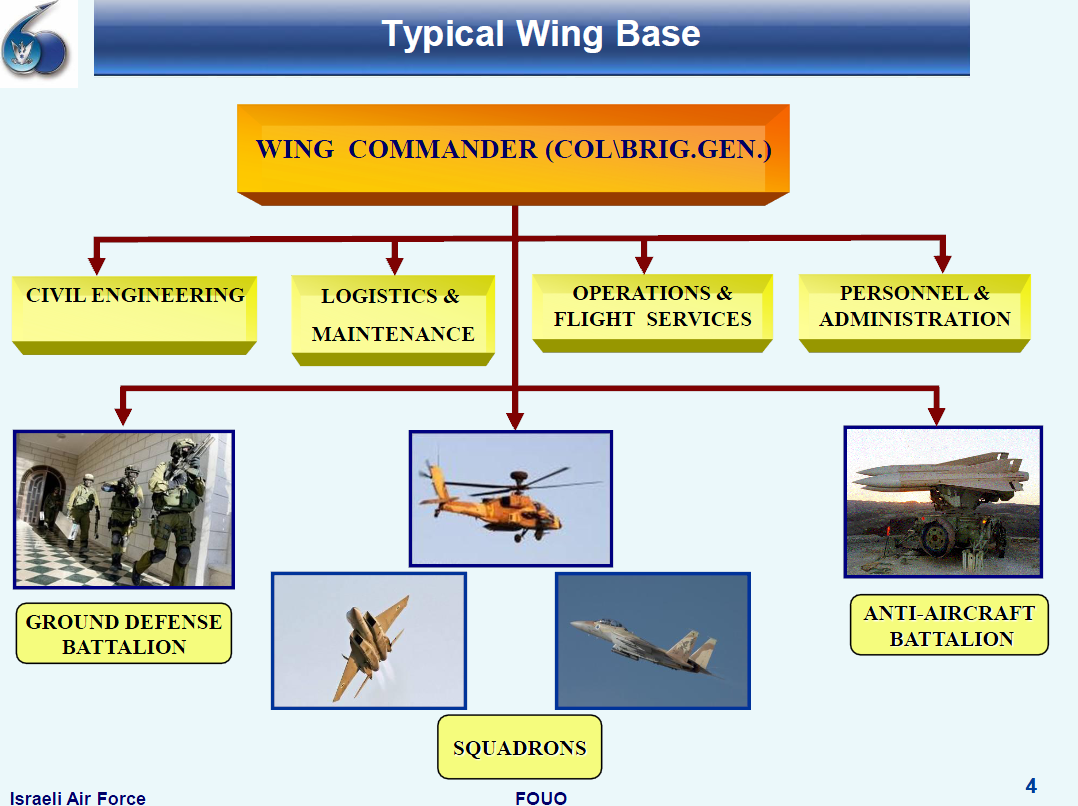
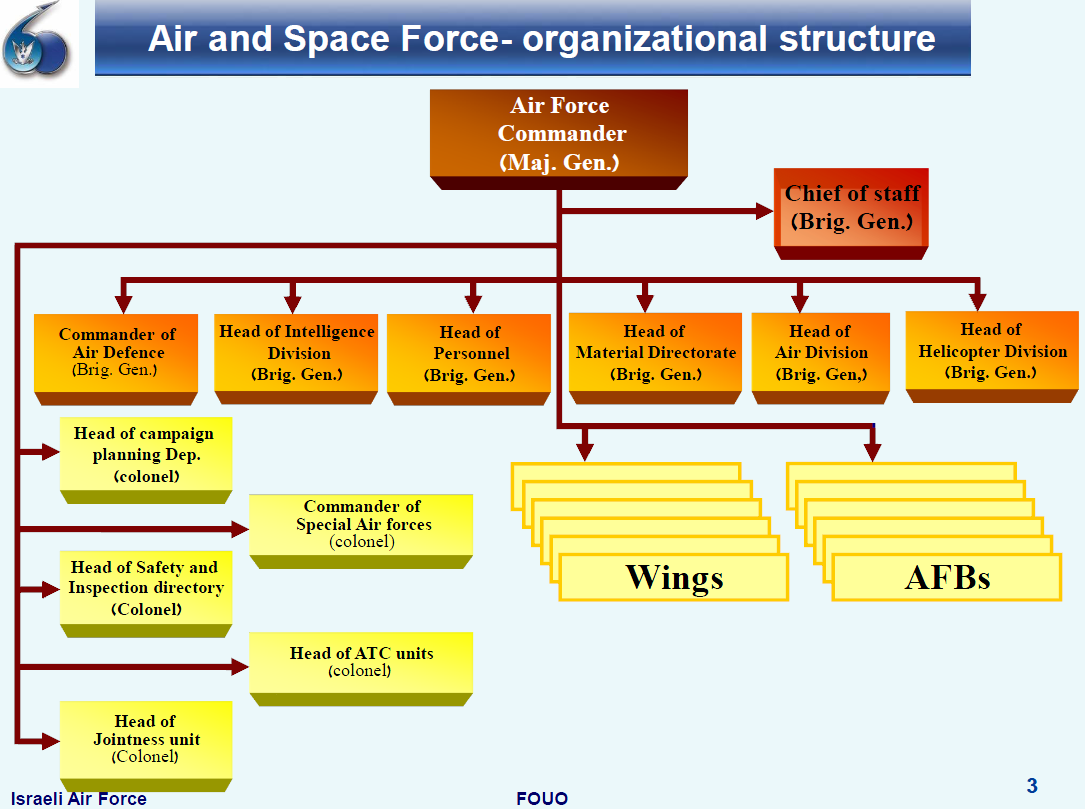
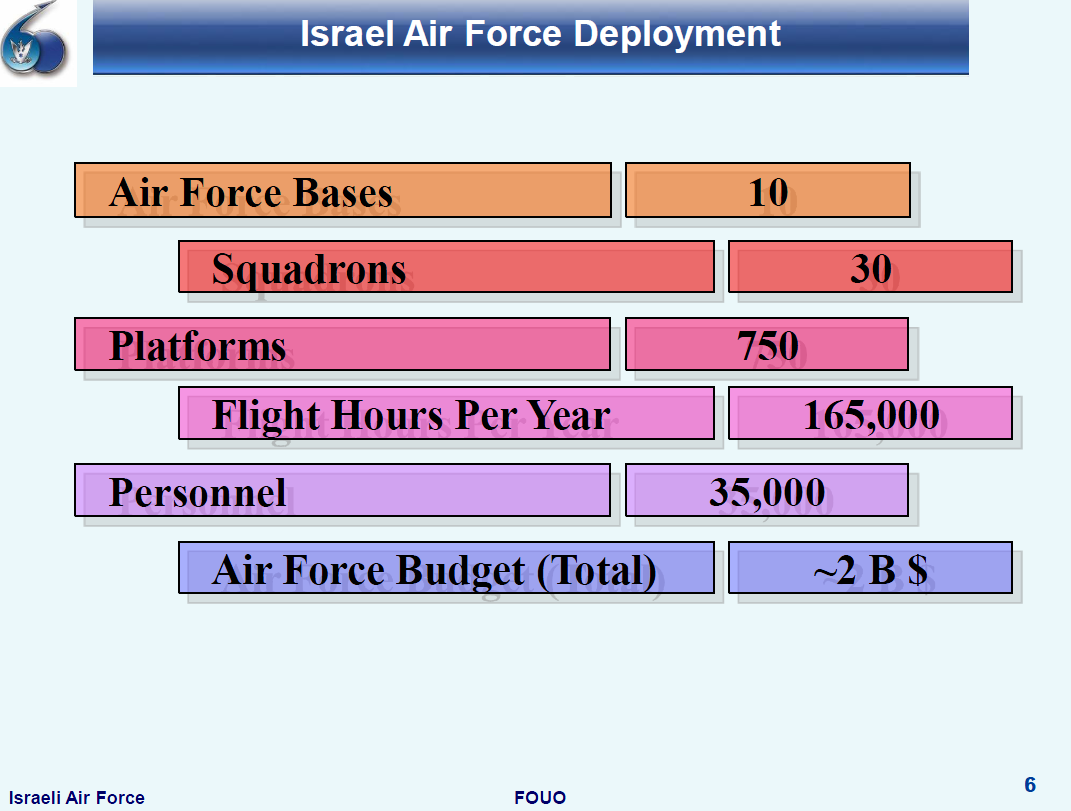
Introduction To The Israeli Air Force
Introduction To The Israeli Air Force: "
Israeli Air Force
- 6 pages
- For Official Use Only
- August 14, 2007
"
Subscribe to:
Comments (Atom)